
Analytical Report
An academic report requires students to develop a coherent analysis of a selected problem within a specific social, business, or academic context. Students

Tools: simple materials, such as paper, markers, and building blocks; role cards; worksheets for recording results and reflections; a timer; and space for teamwork
Best for: understanding complex processes, experiential learning, teamwork, and decision-making under uncertainty

Simulation games recreate selected aspects of reality in an academic setting. In management and economics, they can be used to explore areas such as running a business, making strategic decisions, managing teams, negotiating, planning budgets, responding to crises, organising processes, logistics, marketing, sales, or competing in a market.
During a simulation, students take on specific roles, make decisions, and observe their consequences. This helps them identify the causes of particular outcomes and understand the relationship between decisions and results. Each iteration deepens their understanding of how the system works.
The method supports the understanding of complex phenomena by helping students recognise connections between resources, constraints, and outcomes, as well as the dynamics of change over time. Knowledge is built through experience, analysis, and shared reflection. Simulation games also increase engagement through emotion, teamwork, and a sense of influence over the final outcome. Reflection after each stage helps students organise their experience and draw meaning from it.
The method can take various forms, including a short simulation of a single process, an extended multi-stage game, a role-based decision-making simulation, a process game illustrating workflows, or a simulation enriched with random events. This flexibility makes it possible to adapt the activity to the learning objectives and the level of the group.
Simulation games may also present challenges. Students may focus on action rather than analysis, make decisions without referring to data, lose momentum, or participate unevenly. For this reason, it is important to plan moments for reflection, require students to justify their decisions, define the rules clearly, and assign roles and responsibilities to each participant.
Course: Production Management
Topic: Production Process Design
Students work in teams as the department responsible for designing and launching the production process for a new product. Their task is to translate customer requirements into product and process specifications, and then achieve the expected production outcomes despite limited resources, time constraints, and incomplete information.
Game Introduction (10 min)
The teacher introduces the context: students take on the role of a production team responsible for designing and launching the production of a new type of military phone. The constraints related to time, resources, and technology are clearly defined.
Theory Input (15–40 min)
Each student proposes an individual solution. The team then selects the best option, considering both cost and the extent to which it meets the customer’s requirements. Students discuss ideas, test possible solutions, and make decisions together.
Process Design (25–50 min)
The team designs the production process. Different concepts and decision-making conflicts may emerge. The teacher supports the analysis but does not make decisions for the students.
Production Simulation (20–50 min)
Students carry out the production task within a limited time. The results may differ from the initial assumptions, and errors or organisational problems may arise.
Reflection and Improvement Decisions (20–30 min)
Students analyse the results, identify the main problems, and set priorities for improvement.
Easier → Provide a ready-made scenario with clearly defined roles.
More Challenging → Introduce additional variables, constraints, and unexpected events.
Formative Assessment
After each round, collect a brief record of the team’s decisions, results, and identified reasons for success or difficulties encountered. Provide feedback on the quality of decision-making, collaboration, and the use of data. Students then prepare a short improvement plan before the next round.
Summative Assessment
Students prepare a short final analysis in which they describe the key decisions made, the results achieved in each round, the mistakes identified, the improvements introduced, and the lessons learned from the simulation. Assessment focuses on the quality of the justification of decisions, the use of data, reflection on collaboration, and the ability to connect the experience to concepts discussed during the course.
An academic report requires students to develop a coherent analysis of a selected problem within a specific social, business, or academic context. Students

Source auditing involves comparing different types of material on the same issue, such as academic articles, industry reports, statistical data, and online content.
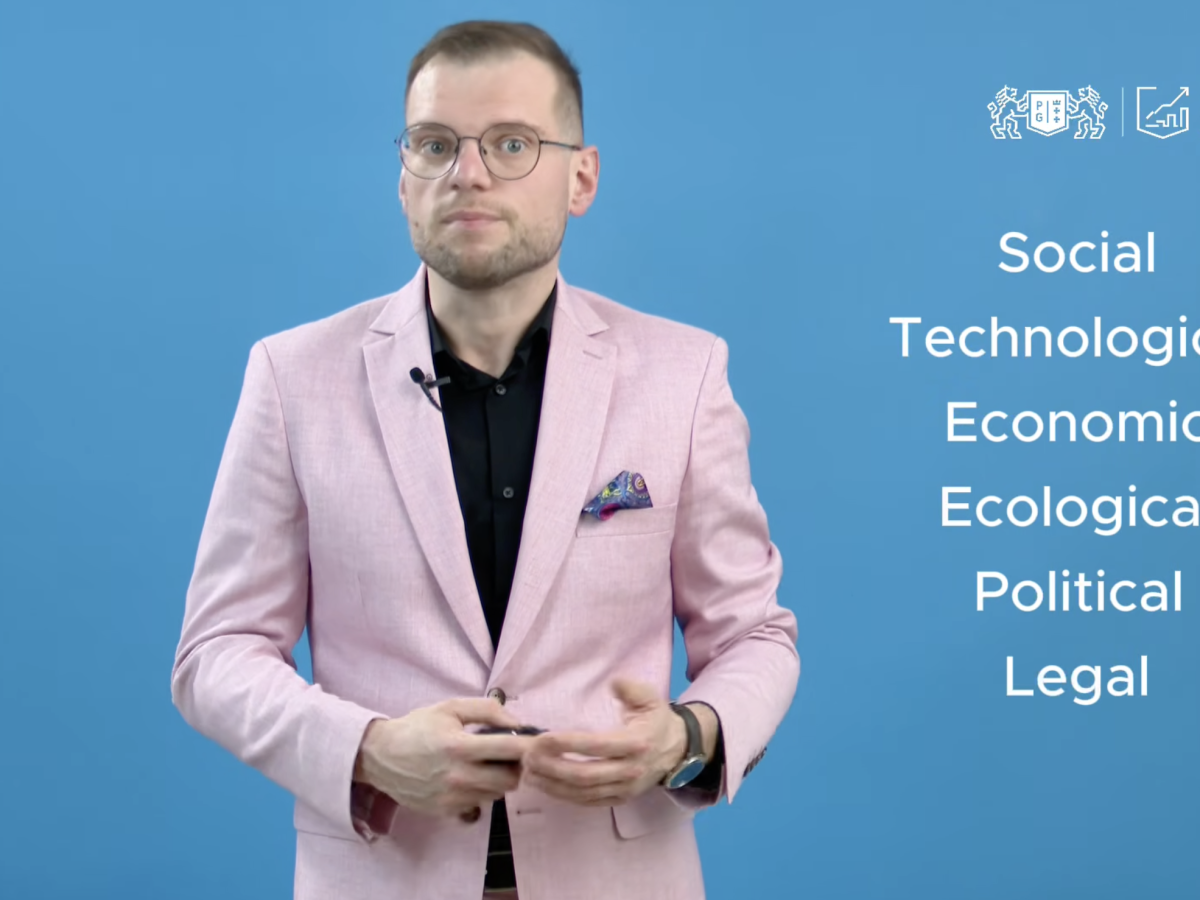
The method involves identifying and organising changes taking place in a selected area.